Transition Vent INSTALLATION
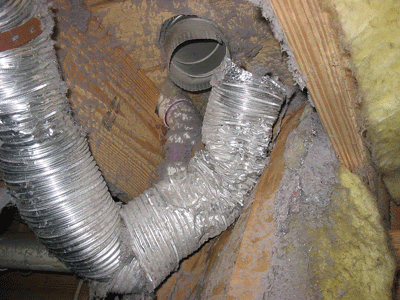
Your transition vent should be flexible enough, to let You move the dryer in and out its usual spot, without any risk of disconnection or breaking. It should not be solid rigid vent as it will restrict any dryer machine relocations needed for cleaning or other purposes. Usually transition vent should not be longer than 8 feet and it should be a single, non-concealed length, can not be run through a wall, ceiling or floor. The product must be listed and labeled in accordance with UL2158A code. The old-style white vinyl or plastic transition vents are prohibited by most modern building codes and appliance manufacturers because they are a serious fire hazard. The state of New Jersey bans white vinyl or plastic transition vent installations or sale. The most common acceptable transition vents are fully flexible high-quality, crush-resistant aluminum foil or semi-rigid aluminum.
On the other side, the vent that is hidden behind the wall should be solid rigid metal vent made of rigid metal, such as galvanized steel or aluminum, with a smooth interior. This is to minimize lint accumulation and maximize airflow, which are crucial for fire prevention.
Screws are generally not allowed to connect these sections as they can protrude into the duct and snag lint, leading to blockages. We use pro-grade HVAC tape and clamps for the vent connections
Building codes, such as the International Residential Code (IRC) and the International Mechanical Code (IMC), and safety organizations like Underwriters Laboratories (UL), have very specific requirements for dryer vent and transition vent materials and installation methods.
Here are some answers to most popular question:
Why Do I Need Transition
Vent Replacement?
The transition vent is an important component of
your dryer's exhaust system, as it operates at the
highest temperatures. Unlike the rigid metal venting
concealed within your walls, this flexible component
degrades more quickly from prolonged heat exposure.
Timely replacement is essential for preventing vent
failure, which can lead to fire hazards and decreased
appliance efficiency.
How Often Should I replace it?
While a typical replacement interval is 4 to 6 years, the actual lifespan of your vent is influenced by its installation and usage. A poorly installed, kinked, jammed or otherwise obstructed vent will degrade much faster and should be replaced without delay to ensure safe and efficient operation.
CAN I REPLACE the Vent MYSELF?
While homeowners can certainly undertake this project, it often involves moving heavy appliances and working in tight spaces. For those who prefer a professional, guaranteed installation without the hassle, our service provides a convenient, worry-free solution. Replacing a dryer vent is a task that some homeowners choose to handle themselves, often with the help of online tutorials. For those seeking assurance and convenience, however, our professional installation service offers significant benefits. Our experienced technicians provide a comprehensive solution that includes:
-
Safe handling of the dryer.
-
Correct removal of the old vent.
-
Precise installation of the new component.
-
A professional warranty on our work.
For many, the peace of mind and time savings
of a professional installation outweigh the challenges
of a do-it-yourself approach.
I Will provide the vent, Can You install it?
Unfortunately, we cannot install a vent provided by a customer. This is because we must ensure the safety and quality of every product we install. By selecting and providing the transition vent ourselves, we can guarantee it meets our safety standards and ensure it's installed correctly.
We know there are a lot of options available at places like Amazon or Home Depot, but since we offer a 90-day warranty on our work, we need to be confident in the products we use. This helps us ensure your home is as safe as possible from potential fire hazards or other issues.


Why Your product is better than Others?
Underwriters Laboratories (UL) published this extensive safety standard for "Clothes Dryer Transition Ducts." In simple terms, this means that any flexible duct used to connect a clothes dryer to its wall exhaust system must be certified to meet this standard.
That's why we rely on the UL 2158A safety standard, which provides a clear guideline for the flexible transition duct that connects your dryer to the wall.
UL 2158A certification is not easily earned. The transition duct must pass a series of intensive performance tests, including:
-
Flame Resistance: To ensure it can withstand the high heat of a dryer.
-
Structural Integrity: Testing for bending, impact, and puncture resistance to prevent damage and maintain airflow.
-
Corrosion Resistance: To guarantee a long-lasting and effective product.